
Donkey Secondary Antibodies


Biotium Ksp-Cadherin / CDH16(CDH16/1071), CF647 conjugate, 0.1mg/mL
This MAb recognizes a protein of 130 kDa, identified as Ksp-cadherin. Cadherins form a superfamily of related glycoproteins that mediate calcium-dependent cell adhesion and transmit signals from the extracellular matrix to the cytoplasm. Cadherins have been implicated in embryogenesis, tissue morphogenesis, tissue structure maintenance, cell polarization, neoplastic invasiveness and metastasis, and membrane transport. It is suggested that Ksp-cadherin is a marker for terminal differentiation of the basolateral membranes of renal tubular epithelial cells. Within the kidney, Ksp-Cadherin is found exclusively in the basolateral membrane of renal tubular epithelial cells and collecting duct cells, and not in glomeruli, renal interstitial cells, or blood vessels. Ksp-Cadherin has been suggested to distinguish Chromophobe Renal-Cell Carcinoma from Oncocytoma.Primary antibodies are available purified, or with a selection of fluorescent CF Dyes and other labels. CF Dyes offer except


Biotium Primary Antibody Nucleolin 2507.NCL CF647 1/EA
Nucleolin (2507 NCL) is a recombinant mouse monoclonal antibody that recognizes nucleolin This CF647 antibody conjugate has been validated in Immunofluorescence CF and reg dyes are Biotiums line of next-generation fluorescent dyes with advantages in brightness and photostability
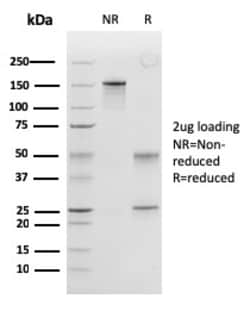
Biotium Peroxiredoxin 4 (Prognostic Marker for Lung SqCC)(CPTC-PRDX4-2), CF647 conjugate, 0.1mg/mL
The peroxiredoxin (PRX) family comprises six antioxidant proteins, PRX I, II, III, IV, V and VI, which protect cells from reactive oxygen species (ROS) by preventing the metal-catalyzed oxidation of enzymes. The PRX proteins primarily utilize thioredoxin as the electron donor for antioxidation, although they are fairly promiscuous with regard to the hydroperoxide substrate. In addition to protection from ROS, peroxiredoxins are also involved in cell proliferation, differentiation and gene expression. PRX I, II, IV and VI show diffuse cytoplasmic localization, while PRX III and V exhibit distinct mitochondrial localization. The human PRX IV gene is expressed in many tissues. It exists as a precursor protein, which is only detected in testis, and aprocessed secreted form. PRX IV is highly expressed in lung cancer and is necessary for the promotion of lung cancer in vitro. Studies have demonstrated that PRX IV positive expression is significantly correlated with recurrences and
Biotium Desmoglein-2 (DSG2) (8E5), CF647 conjugate, 0.1mg/mL
This antibody recognizes a protein of 165 kDa, identified as Desmoglein-2 (DSG2). This monoclonal antibody This antibody recognizes the extracellular domain of human desmoglein-2. Desmoglein-2 is a member of the desmosomal cadherin family. Desmosomes are intercellular adhering junctions that represent cell surface attachment sites for intermediate filament. Desmocollins and desmogleins are the main desmosomal transmembrane proteins. Desmogleins consist of Dsg1, Dsg2, Dsg3, and Dsg4 isoforms. Within the desmosome, the extracellular domain of desmoglein is essential for calcium dependent heterophilic binding to the desmocollins, whereas the intracellular domain is essential for binding to the desmosomal plaque protein, plakoglobin. Human Desmoglein-2 is a type I transmembrane glycoprotein of 1117 amino acid (aa) residues with a 23 aa signal peptide and a 25 aa propeptide. It differs from other classic cadherins by having four instead of five cadherin repeat domains in its extra
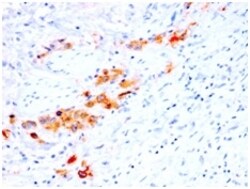
Biotium CD44v4 (Marker of Tumor Metastasis) (rCD44v4/1219), CF647 conjugate, 0.1mg/mL
This antibody recognizes an epitope encoded by exon v4 on the variant portion of human CD44. The CD44 molecule belongs to a family of cellular adhesion molecules found on a wide range of normal and malignant cells in epithelial, mesothelial and hemopoiesis tissues. CD44 is a single gene with 20 exons, of which 10 are normally expressed to encode the basic CD44 (H-CAM) molecule. The additional 10 exons (v1 to v10) are only expressed by alternative splicing of the nuclear RNA. The expression of specific cell adhesion molecule CD44 splice variants has been reported to be associated with metastasis in certain human malignancies.Primary antibodies are available purified, or with a selection of fluorescent CF Dyes and other labels. CF Dyes offer exceptional brightness and photostability. Note: Conjugates of blue fluorescent dyes like CF405S and CF405M are not recommended for detecting low abundance targets, because blue dyes have lower fluorescence and can give higher non-spec
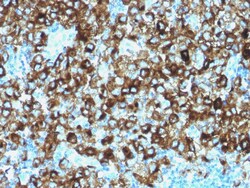
Biotium gp100 / Melanosome / PMEL17 / SILV (Melanoma Marker)(N/A), CF647 conjugate, 0.1mg/mL
Cytotoxic T lymphocytes (CTLs) recognize melanoma-associated antigens, which belong to three main groups. These groups include tumor-associated testis-specific antigens, melanocyte differentiation antigens and mutated or aberrantly expressed antigens, which are routinely used as markers to identify melanomas based on their binding to specific monoclonal antibodies. gp100, also designated ME20-M, ME20-S and PMEL 17, is classified as a melanocyte differentiation antigen and is expressed at low levels in normal cell lines and tissues, but is upregulated in melanocytes. gp100 is a highly glycosylated protein. It is also the product of proteolytic cleavage, which results in a secreted protein.Primary antibodies are available purified, or with a selection of fluorescent CF Dyes and other labels. CF Dyes offer exceptional brightness and photostability. Note: Conjugates of blue fluorescent dyes like CF405S and CF405M are not recommended for detecting low abundance targets, b

Jackson Immuno Research Labs Alexa Fluor 647-AffiniPure F(ab')2 Fragment Donkey Anti-Mouse IgM µ Chain Specific
Alexa Fluor 647-AffiniPure F(ab')2 Fragment Donkey Anti-Mouse IgM µ Chain Specific
Biotium S100B(S100B/1012), CF647 conjugate, 0.1mg/mL
S100 belongs to the family of calcium binding proteins. S100A and S100B proteins are two members of the S100 family. S100A is composed of an alpha and a beta chain whereas S100B is composed of two beta chains. This antibody is specific against an epitope located on the beta-chain (i.e. in S-100A and S-100B) but not on the alpha-chain of S-100 (i.e. in S-100A and S100A0). This antibody can be used to localize S-100A and S-100B in various tissue sections. S-100 protein has been found in normal melanocytes, Langerhans cells, histiocytes, chondrocytes, lipocytes, skeletal and cardiac muscle, Schwann cells, epithelial and myoepithelial cells of the breast, salivary and sweat glands, as well as in glial cells. Neoplasms derived from these cells also express S-100 protein, albeit non-uniformly. A large number of well-differentiated tumors of the salivary gland, adipose and cartilaginous tissue, and Schwann cell-derived tumors express S-100 protein. Almost all malignant melanomas and case
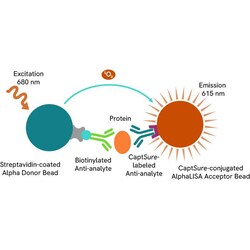
Revvity Health Sciences Inc AlphaLISA SureFire Ultra Human & Mouse Total CaMKII Detection Kit, 500 Assay Points
AlphaLISA SureFire Ultra Human & Mouse Total CaMKII Detection Kit, 500 Assay Points

Immunology Consultants Affinity Purified Donkey anti-Mouse IgG H+L Antibody - Highly Cross-Adsorbed, 1.0 mg
Donkeys were immunized with highly purified mouse IgG h+l and resulting antiserum was collected. Antibody was solid phase adsorbed using bovine, chicken, goat, guinea pig, horse, hamster, human, rabbit, rat and sheep immunosorbents to remove cross reactive antibody. Specific antibody was immunoaffinity purified off a mouse IgG containing immunosorbent. Antibody concentration was determined using an absorbance at 280 nm: 1.4 equals 1.0 mg of IgG. This antibody will react with mouse IgG and with light chains common with other mouse immunoglobulins as determined by ELISA and IEP techniques. It has less than 1% cross reactivity with bovine, goat, guinea pig, horse, hamster, human, rabbit, rat and sheep IgG and chicken IgY. This antibody is suitable for blotting, ELISA and IHC applications. This antibody may cross react with IgG from other species. Optimal working dilutions should be determined experimentally by the investigator.
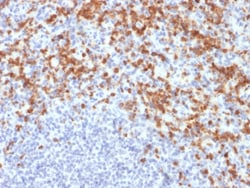
Biotium MMP9 (Matrix Metalloproteinase 9)(MMP9/2477), CF647 conjugate, 0.1mg/mL
The matrix metalloproteinases (MMP) are a family of peptidase enzymes responsible for the degradation of extracellular matrix components, including collagen, gelatin, fibronectin, laminin and proteoglycan. Transcription of MMP genes is differentially activated by phorbol ester, lipopolysaccharide (LPS) or staphylococcal enterotoxin B (SEB). MMP catalysis requires both calcium and zinc. MMP-9 (also designated 92 kDa type IV collagenase or gelatinase B) has been shown to degrade bone collagens in concert with MMP-1 (also designated interstitial collagenase, fibroblast collagenase or collagenase-1), and cysteine proteases and may play a role in bone osteoclastic resorption. MMP-1 is down-regulated by p53, and abnormality of p53 expression may contribute to joint degradation in rheumatoid arthritis by regulating MMP-1 expression. Primary antibodies are available purified, or with a selection of fluorescent CF Dyes and other labels. CF Dyes offer exceptional brightness and photo

Jackson Immuno Research Labs Rhodamine Red-X-AffiniPure Fab Fragment Donkey Anti-Goat IgG (H+L)
Rhodamine Red-X-AffiniPure Fab Fragment Donkey Anti-Goat IgG (H+L)

Jackson Immuno Research Labs Fluorescein (FITC)-AffiniPure Fab Fragment Donkey Anti-Goat IgG (H+L)
Fluorescein (FITC)-AffiniPure Fab Fragment Donkey Anti-Goat IgG (H+L)

Cytek Biosciences Inc Donkey aGt IgG Anti Secondary
Product Name: Biotin Donkey Anti-Goat IgG (H&L)
Product Class: Antibody
Type: Secondary
Product Name: Biotin Donkey Anti-Goat IgG (H&L)
Cytek Catalog Number: 30-8080-M001
Marker: IgG (H&L)
Target Species: Goat
Reported Cross Reactivity: Goat
Clonality: Polyclonal
Host Species: Donkey
Conjugation: Biotin
Size: 1 mg